
Your two-year-old has a cavity. The idea of a drill, a needle, and a small child who cannot yet sit through a haircut is daunting for everybody, including us.
Silver diamine fluoride, usually shortened to SDF, is a liquid we paint on a cavity to stop it from growing. No drill, no numbing, about a minute of chair time. There is a real trade-off, and it is visible: the treated decay turns permanently black.
What Does Silver Diamine Fluoride Actually Do?
SDF is a liquid of silver and fluoride that we brush onto active decay. The silver kills the bacteria driving the cavity and the fluoride hardens what is left, so the decay stops advancing.
How It Stops a Cavity
Decay is a bacterial process, not a hole that appears on its own. The silver in SDF is antimicrobial and ends that process on the surface it touches. The fluoride then remineralizes the softened tooth structure underneath, leaving a harder, darker, inactive surface behind.
What It Does Not Do
SDF does not rebuild the tooth or fill the hole. The cavity is still there in shape; it is simply arrested. Think of it as stopping rust, not repairing the panel. If your child needs that shape back in order to chew comfortably, SDF alone is not the answer.
What the Appointment Looks Like
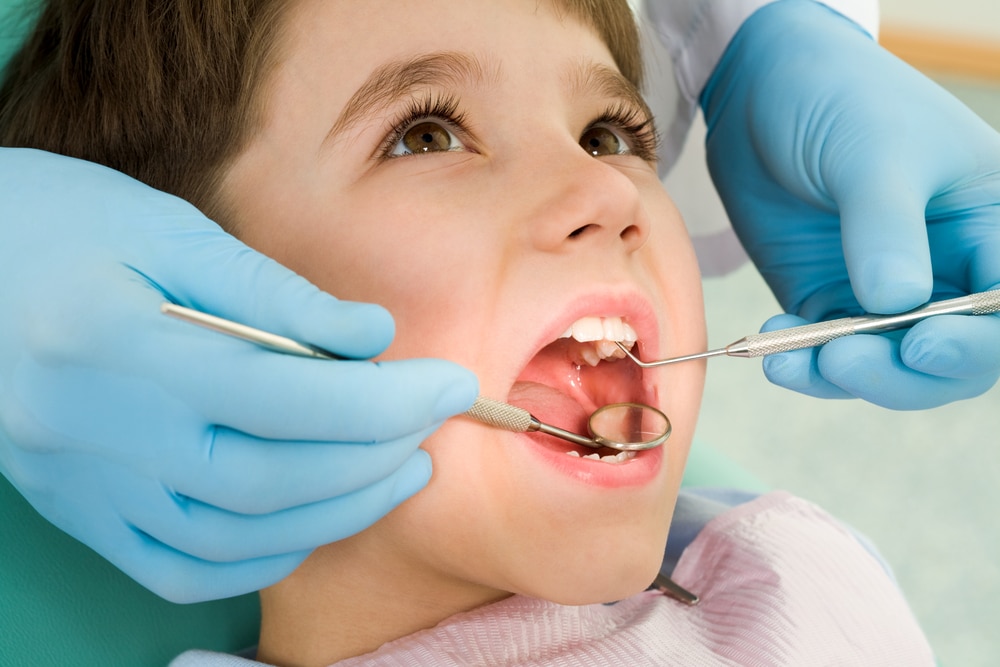
We dry the tooth, isolate it with cotton and a bib, brush on the liquid, and let it sit for a minute. No anesthetic, no suction battles, no reclining for twenty minutes. Most children barely register that anything happened, and we usually reapply at follow-up visits.
When Do We Recommend SDF Instead of a Filling?
The decision is about the child and the tooth, not about avoiding treatment. These are the situations where SDF is usually the better first move.
Good Candidates for SDF
- Toddlers and very young children who cannot yet tolerate a filling
- Children with special health care needs for whom traditional restoration would require sedation
- Multiple cavities where we need to stabilize the mouth quickly and treat in stages
- Cavities on baby teeth that will be lost within a couple of years
- Decay in spots that are difficult to restore well
- Families who want to avoid sedation, or for whom the cost of restorative care under sedation is out of reach right now
When a Filling Is the Better Choice
- The cavity is large enough that the tooth needs structure back to chew properly
- A front tooth where a black stain would be visible and would bother your child
- Decay close to the nerve, where arresting the surface will not prevent pain
- Any tooth already causing symptoms, or showing signs of infection
- A child who can comfortably sit through a routine filling, which many four- and five-year-olds can
For deeper decay we may still need a crown or a tooth-colored restoration; our page on white crowns and fillings explains those options, and fillings for kids covers the standard approach.
SDF vs. a Filling, Side by Side
Neither treatment is universally better. They answer different questions, and the table below is the comparison we end up drawing on the back of a chart for most parents.
| Silver diamine fluoride | Filling | |
|---|---|---|
| Chair time | About a minute per tooth | Fifteen to thirty minutes per tooth |
| Numbing | None | Local anesthetic in nearly all cases |
| Drilling | None | Yes, to remove decay |
| Appearance | Treated decay turns permanently black | Tooth-colored options available |
| Function restored | None — the hole remains | Rebuilds the shape of the tooth |
| Durability | Needs rechecks and reapplication | Definitive until the restoration fails |
| Relative cost | The least expensive treatment we offer for active decay | Higher, and higher again if sedation is needed |
| Best for | Toddlers, many teeth at once, back baby molars | Larger cavities, front teeth, a child who can sit through it |
Read across the row that matters most to your family. For a nervous three-year-old with decay on a back molar, chair time and numbing decide it. For a four-year-old with a cavity on an upper front tooth, appearance usually does.
What Parents Should Know About the Staining
Be prepared for this, because it is the part parents wish someone had explained more clearly. The decayed area turns dark brown to black within a day or two, permanently.
Where It Shows and Where It Does Not
Healthy enamel is not stained; only the decay darkens. On back baby molars, nobody sees it. On upper front teeth, it is noticeable in photographs and in conversation. If appearance matters to your child, and by four or five it often does, a tooth-colored restoration is the better call even though it means more chair time.
Stains on Skin, Clothing and Countertops
SDF can also mark skin and fabric temporarily, so we isolate carefully, use a bib, and keep the liquid well away from lips and cheeks. Any mark on skin fades within a few days as the surface cells turn over.
Is SDF Safe for Young Children?
SDF has been used internationally for decades and is well studied in children. The most common side effect is a brief metallic taste.
Who Should Not Have It
We do not use SDF on children with a silver allergy, and we avoid it on teeth showing signs of pulp involvement or infection. Arresting a surface will not resolve a problem inside the tooth, and treating one as though it were the other only delays the care your child needs.
What We Check First
Before we recommend it we look at how deep the decay runs on an x-ray, whether the tooth is symptomatic, how long that tooth is expected to stay in the mouth, and how visible it is when your child smiles.
What Happens After the Tooth Is Treated?
SDF is not a one-time fix that ends the conversation. It buys time, and what you do with that time decides whether the next visit is easy.
Rechecks and Reapplication
We recheck the tooth at roughly six-month intervals and reapply as needed. We also watch whether the arrested tooth eventually needs a restoration anyway, particularly if the cavity is large enough that food packs into it.
Changing What Caused the Cavity
A toddler with cavities almost always has a habit driving them: a bottle or cup at night, frequent juice, or grazing. Practically, that means water between meals instead of milk or juice, nothing but water in bed, brushing twice a day with a smear of fluoride toothpaste, and flossing wherever the back teeth touch. Our guide to preventing cavities in young children is where to start, and it will do more than any material we paint on.
Fluoride Beyond the Office
We will also check whether your child’s fluoride exposure is adequate, since well water and filtered water change the picture, and we may recommend in-office fluoride more often than twice a year for a high-risk child.
When to Call Us Sooner
An arrested cavity should be quiet. Call and bring your child in without waiting for the next scheduled visit if you notice any of the following.
- A dark hole that is visibly growing between visits
- A bump, pimple or swelling on the gum near the tooth
- Your child avoiding chewing on one side
- Complaints of pain at night, or a child waking because of a tooth
- A strong reaction to cold or sweet foods
Symptoms mean something is happening inside the tooth, and that needs more than a coating.
Frequently Asked Questions About SDF
Does silver diamine fluoride hurt?
No. There is no drilling and no injection. The tooth is dried, the liquid is brushed on, and the whole thing is over in about a minute. Some children mention a brief metallic taste afterward.
Is the black spot permanent?
On that tooth, yes, until the decay is restored or the baby tooth is lost naturally. The stain marks only the decayed area, not the healthy enamel around it.
Will insurance cover SDF?
Many plans do, and it is inexpensive compared with restorative care, particularly restorative care that would require sedation. We check benefits and give you the estimate before we treat.
Can we do SDF now and a filling later?
Yes, and that is a common and sensible plan. Arresting the cavity now and restoring the tooth when your child is a year older often turns an appointment that would have needed sedation into a routine one.
Is SDF just delaying real treatment?
Sometimes deliberately, which is the point. Buying eighteen months while a child matures is a real clinical benefit, not a shortcut, as long as the tooth is being watched.
Let Us Look at the Tooth
Whether SDF is right depends on which tooth, how deep the decay runs, and how old your child is, and we can tell you in one visit.
Learn about our pediatric dental services in Frisco or book an appointment with Dr. Laura Mitchell and our team.