Plenty of children breathe through their mouths sometimes. A stuffy nose, a cold, a hard run around the yard in a Frisco August, all perfectly normal.
What is worth a closer look is the child whose mouth is open by default, night after night, when nothing is obviously wrong. That pattern shows up in the mouth, which is often how it gets caught.
Is Mouth Breathing in Children a Problem?
Occasional mouth breathing is normal. Habitual mouth breathing, especially during sleep, is worth investigating, because a mouth that stays open all night dries out and dry mouths get more cavities and irritated gums.
The reason we screen for it is not that a dentist treats breathing. It is that the mouth shows the evidence early, sometimes before anyone has connected the snoring to anything dental.
What Causes a Child to Breathe Through Their Mouth?
The common reasons are mechanical: something is making nose breathing harder, or a habit outlasted the reason for it. Enlarged tonsils or adenoids, chronic allergies and congestion, and a restrictive tongue tie are all on the list, which is why the answer often involves your pediatrician or an ENT rather than only us.
That is worth saying plainly. Diagnosing an airway problem is not a dental job. Noticing the dental fallout and telling you where to go next is.
What Are the Signs of Mouth Breathing?
Most of the useful clues are things you can see at home, and most of them show up at night. Use this as a watch list rather than a diagnosis.
| Sign | What parents usually notice | Why a dentist pays attention |
|---|---|---|
| Sleeping with the mouth open | Lips apart all night, sometimes with snoring | Air drying the mouth all night reduces the saliva that protects teeth |
| Waking up thirsty or with dry, cracked lips | A water cup at the bedside every night | Dry mouth raises cavity risk even when brushing is good |
| Puffy or bleeding gums at the front | Gums that look red only in one area | Dried-out tissue in front is a classic pattern we can spot on exam |
| Restless sleep or daytime crankiness | A child who sleeps long hours but seems tired | Poor sleep quality is worth flagging to your pediatrician |
| A narrow upper arch or crowded teeth | Teeth that look tight or overlapped | Arch shape and breathing habits often show up together |
What We See on the Exam
At a routine visit we are looking at more than cavities. Chronically dry front gum tissue, plaque that concentrates on the front teeth despite decent brushing, a narrow upper arch, and worn edges from grinding all fit the pattern. When several show up together, we bring it up.
Digital X-rays and an intraoral camera let us document what we are seeing and show you rather than just describe it, which also makes the conversation with your pediatrician much easier.
Why the Cavity Connection Matters
Saliva is not just wet. It rinses food away, buffers acid and carries the minerals that repair enamel between meals. Reduce it for eight hours a night, every night, and the same brushing routine simply protects less than it used to. That is why we sometimes recommend more frequent checkups for a child who mouth-breathes, and why we go over the cavity prevention basics again with those families even when nothing is wrong yet.
Does Mouth Breathing Change How the Face and Teeth Grow?
This is where parents find the strongest claims online, so here is the careful version: dentistry has long observed that habitual mouth breathing tends to travel with a narrow upper arch, crowded teeth and an open-lip resting posture. What is well established is the association, not a promise that breathing alone caused a specific bite.
What That Means for Your Child
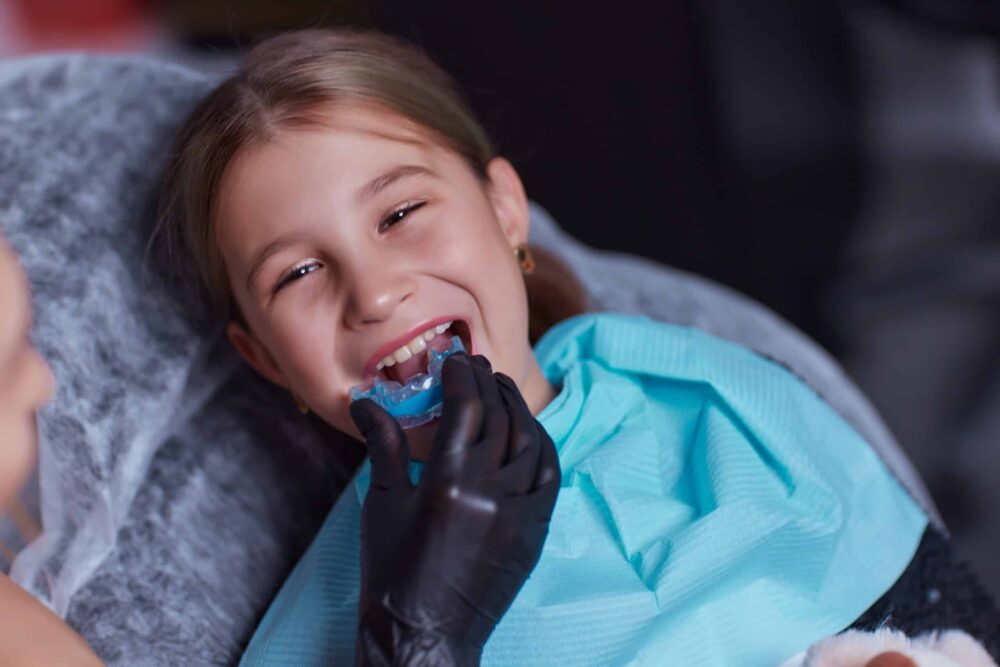
Practically, it means two things. First, if your child mouth-breathes, we watch arch width and bite development a little more closely at each visit. Second, if we recommend an appliance, it is because of what your child’s bite is actually doing, not because of the breathing on its own. Our custom oral appliances guide erupting teeth and create space; we talk about which one fits after the exam, not before.
What About Snoring and Grinding?
Snoring in a child is worth mentioning to your pediatrician, particularly if it happens most nights or comes with pauses or gasping. Nighttime grinding often shows up in the same conversation, and we wrote about that separately in why children grind their teeth at night. Neither one is an emergency. Both are worth reporting rather than watching for another year.
What Should Parents Do Next?
Start by writing down what you see for a week: whether the mouth is open at night, whether there is snoring, how the lips look in the morning, how rested your child seems. A week of notes is more useful to every clinician involved than a single vague memory.
Then bring it up at the next visit. Depending on what we find, that conversation can end with better home care and closer monitoring, a referral to your pediatrician or an ENT for the nose and tonsils, or a look at whether a tongue tie is limiting things, which we cover on our frenectomy page.
How Does This Change Your Child’s Dental Care?
A mouth-breathing pattern does not mean a different kind of dentistry. It means the ordinary parts of pediatric dental care get a bit more attention paid to them.
What We Adjust
Visit frequency is the first lever. A child whose mouth is dry for eight hours a night is running with less natural protection, so we sometimes shorten the interval between checkups from six months to three or four while the underlying cause is being worked out. That is not upselling; it is catching a cavity while it is still small enough to be a small appointment.
We also spend more time on the front teeth specifically, since that is where dried-out tissue and plaque tend to concentrate. And we look harder at grinding wear, because the two often travel together in the same child.
What You Can Do at Home Tonight
- Make the last brushing of the day the thorough one. Whatever is left on the teeth at bedtime sits there in a dry mouth all night.
- Keep water at the bedside rather than juice or milk. A child who wakes up thirsty will drink whatever is closest, and sugar at 2am is worse than dryness.
- Watch the sipping. Slowly nursed sports drinks are one of the more damaging habits we see, and a dry mouth makes them worse.
- Note what you observe for a week. Specifics beat impressions when you talk to your pediatrician.
What We Will Not Claim
It is worth being direct about the limits here, because this topic attracts strong marketing. We are not going to tell you that an appliance will fix your child’s sleep, change their face, or resolve an airway problem. We can tell you what your child’s teeth, gums and arch look like, whether that pattern is consistent with habitual mouth breathing, and who is the right person to see next. When we recommend treatment, it will be for something we can actually see and measure in the mouth.
Frequently Asked Questions About Mouth Breathing in Kids
At what age should I worry about mouth breathing?
There is no cutoff age. What matters is whether it is habitual and happening at night rather than occasional and tied to a cold. If it has gone on for months, mention it at the next visit regardless of age.
Can a dentist fix mouth breathing?
Not on its own. We treat the dental consequences, watch how the bite is developing, and point you toward the right specialist for the nose, tonsils or allergies. Anyone promising to cure a breathing problem with one appliance is overselling it.
Does my child need a sleep study?
That is a call for your pediatrician, not for us. Our part is telling them clearly what we see in the mouth so they have real information to work with.
Will my child grow out of it?
Some children do, particularly when allergies or enlarged tonsils improve. Others keep the habit after the original cause resolves. Either way, checking is cheaper than assuming.
Bring It Up at Your Child’s Next Visit in Frisco
If any of this sounds like your child’s nights, tell us at the next appointment. Dr. Mitchell will look at the whole picture and be straight with you about whether it warrants anything beyond keeping an eye on it.
Call (214) 872-3434 or book a visit at 5110 Eldorado Parkway, Suite 600 in Frisco. We are open Monday through Wednesday from 8am to 5pm and Thursday from 8am to 2pm.